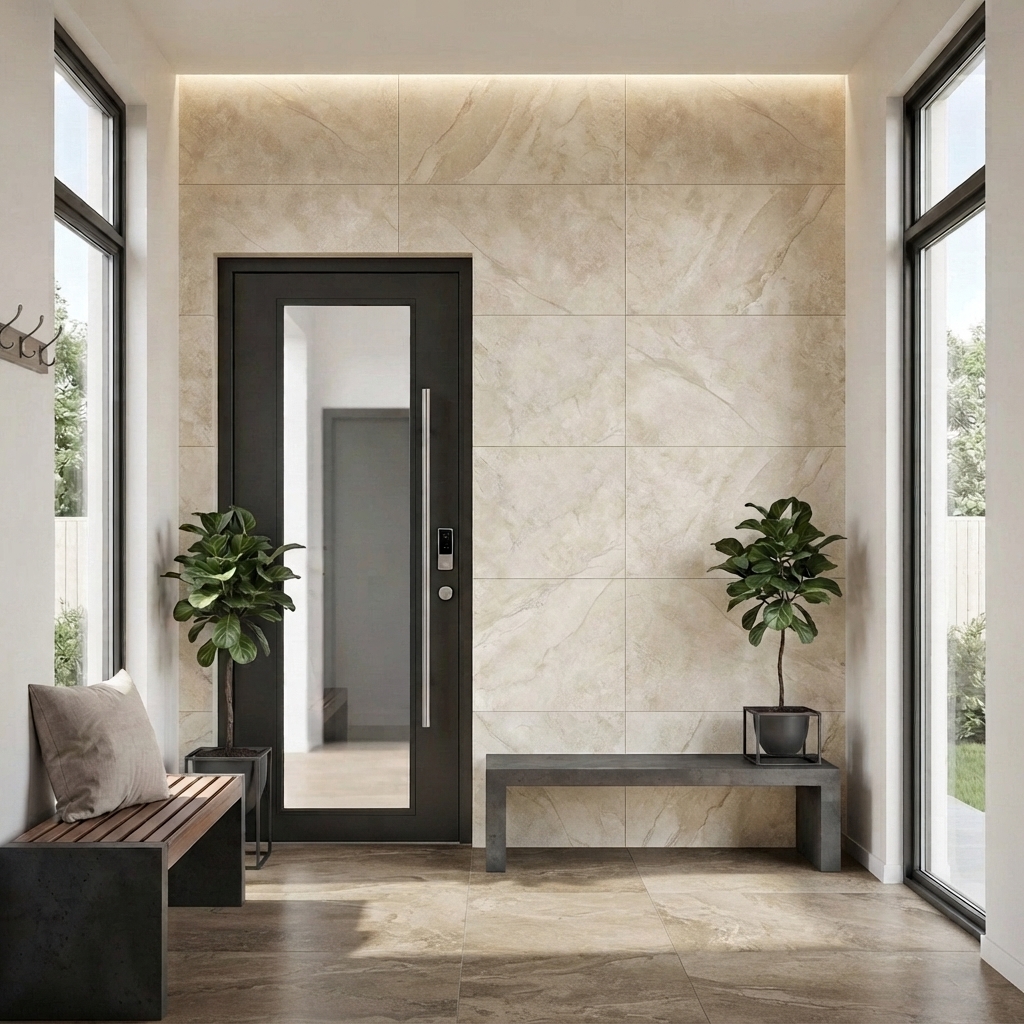
Timber-Look Porcelain vs Real Timber Flooring: What Actually Works in a Queensland Home
Love the look of timber but worried about humidity, wet areas and upkeep? An honest look at timber-look porcelain versus real timber boards for Queensland homes.
By OnWood Tiles
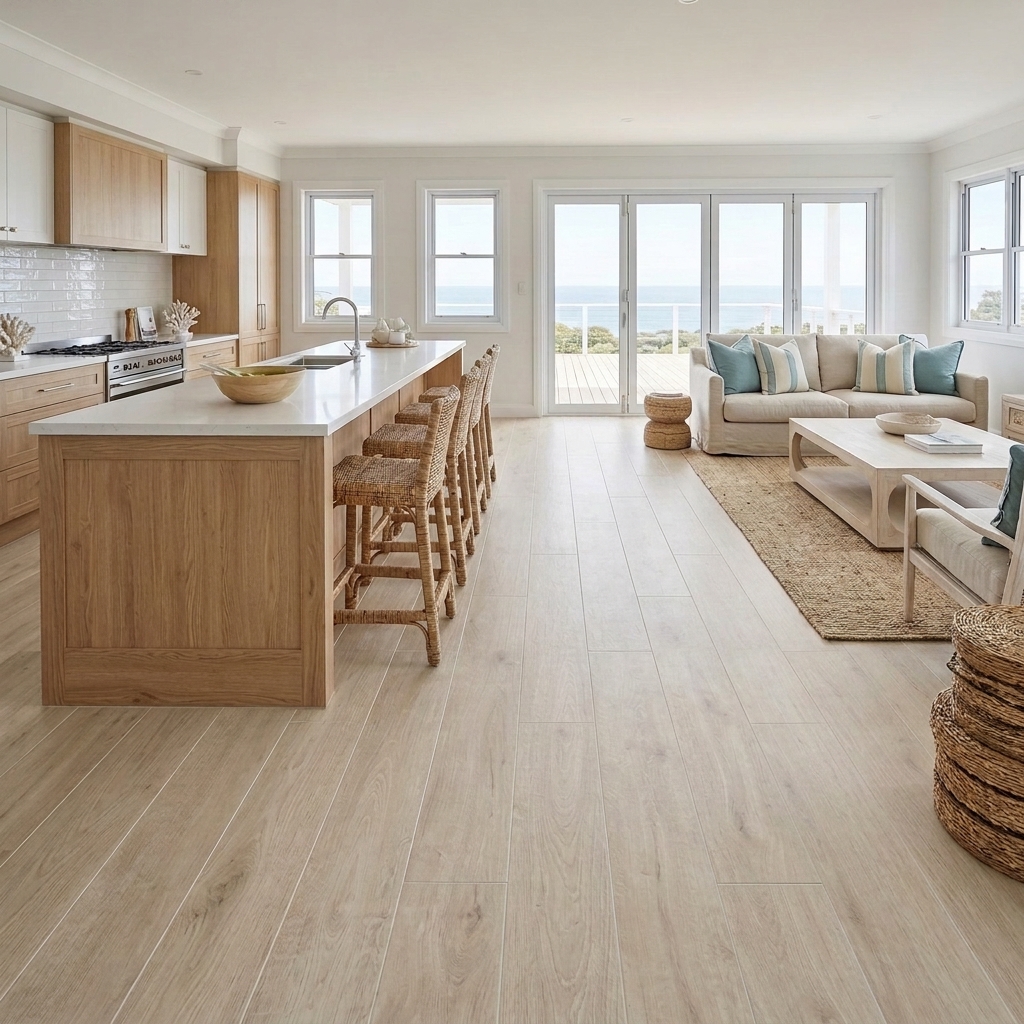
The warmth of timber underfoot is hard to beat. But a Queensland home asks a lot of a floor: humidity, wet feet from the pool, spills, sun, and the odd summer downpour through an open door. Real timber can struggle with all of that. Timber-look porcelain gives you the grain and warmth with none of the worry. Here is the honest comparison.
What real timber does well, and where it struggles
There is a reason people love solid and engineered timber: it is warm, natural, and can be sanded back years down the track. But up here it has real weak spots. Timber moves with humidity, marks and scratches from sand and pets, and it does not love water, so bathrooms, laundries, alfrescos and pool areas are off-limits or high-risk.
- Loves: bedrooms and living rooms in a stable, dry climate.
- Struggles: wet areas, direct sun, humidity swings, scratches and dents.
Why timber-look porcelain wins in the warm, wet north
Timber-look porcelain is a through-body tile printed to look like real boards, right down to the grain and knots. Because it is porcelain, it does not swell, fade or soak up water, so you can run the same warm timber look from the living room straight into the bathroom, laundry and out to the alfresco.
- All the look: realistic grain, plank formats and matt finishes.
- None of the upkeep: no sanding, sealing or re-oiling, just a mop.
- Goes anywhere: wet areas, outdoors and high-traffic zones included.
- Solid and quiet underfoot: bonded to the slab, so there is no hollow tap or spring you often feel underfoot on a floating floor.
- No trims in your doorways: a tiled floor carries straight through from room to room, without the expansion breaks and threshold strips floating floors need every few metres.
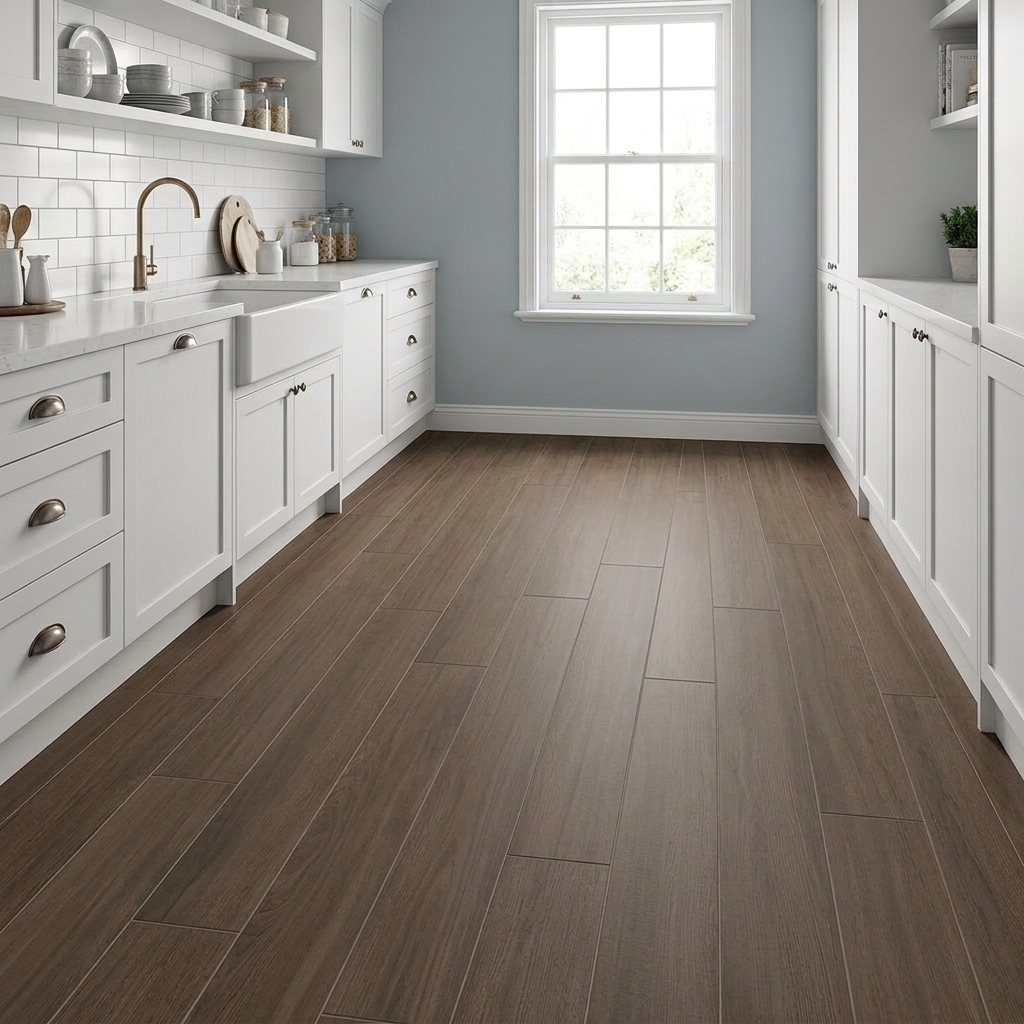
Getting the look right
A few things make timber-look tiles read as the real deal:
- Vary the planks. Lay a mix so no two identical boards sit side by side.
- Match the grout. A grout close to the tile colour hides the joints and reads more like timber.
- Mind the direction. Run planks along the longest wall or toward the main light source.
- Warm your palette. Timber looks love warm whites, greenery and natural stone nearby.
The dream in a coastal home is one continuous floor from the kitchen to the deck. Timber-look porcelain is the only timber that lets you actually do it.
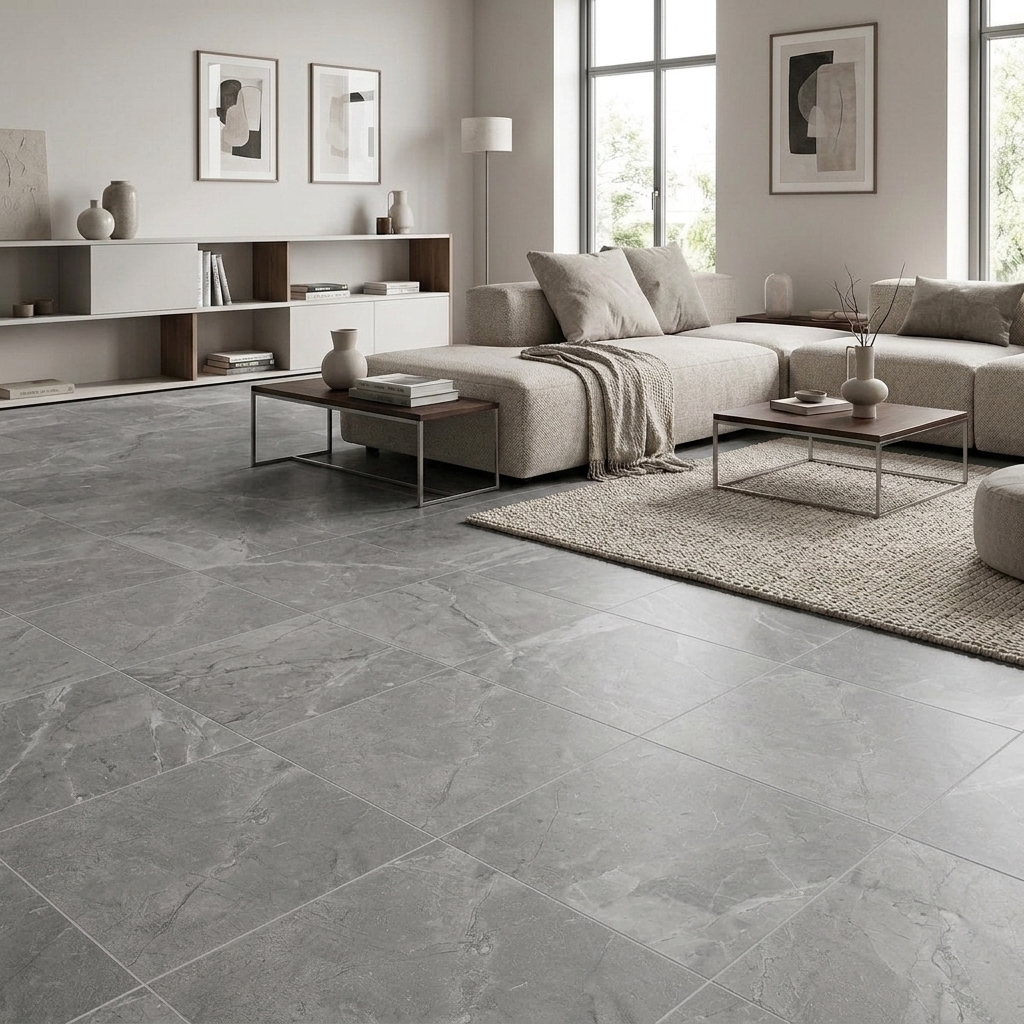
Prefer a softer, stone look?
Not sold on timber? A warm, sandy stone look gives you the same relaxed, natural feel underfoot with the same easy porcelain care, and it sits beautifully next to timber joinery.
What about hybrid or laminate?
They have their place and can be a good budget choice in dry rooms, and floating floors do have genuine upsides worth naming:
- Easy plank swaps: damage a board and you can often lift and replace that single plank, rather than cutting out and re-laying tile.
- No grout lines: nothing to keep clean in the joints, and a quicker, less messy install.
The trade-off is that they are still a surface layer that can chip, lift at the edges and swell if water gets underneath. For a floor that has to cope with Queensland life for the long haul, porcelain is the one we keep coming back to.
Come and feel the difference
Photos never quite capture how convincing a good timber-look tile is now. Drop into our Sunshine Coast showroom with your plans and we will stand real boards next to timber-look porcelain so you can decide with your own eyes. See our timber looks in the shop or read our room-by-room material guide.
Written by OnWood Tiles, 6 August 2026