The history of the subway tile (and the myth attached to it)
The subway tile began as public health equipment in a New York station, not a trend. Here is why the white rectangle has outlasted everything.
By OnWood Tiles

By 1904 the tunnels under New York were dug and the trains ran. The remaining problem was not engineering. It was persuading ordinary people to walk down a staircase into a hole in the ground, something almost none of them had ever done.
So the architects Heins and La Farge did not design a tunnel. They designed a room: vaulted, ornamented, and lined at eye level in small white glazed tiles, three inches by six. The reasons had nothing to do with fashion, and every one of them still holds today. That is the quiet story behind subway tile history, and it explains why these white wall tiles never seem to leave.
Three reasons, none of them decorative
- Light. A glossy white glaze is close to the most reflective interior surface money can buy. In a station with no windows and dismal early electric lighting, tile did the work of lamps nobody could afford.
- Cleanliness. A vitrified glaze absorbs nothing. In a space handling thousands of strangers a day, in a city that had just worked out what caused cholera, the tile was not decoration at all.
- Endurance. A fired glaze is a thin layer of glass. It does not fade, chalk, or need repainting, and some of the original 1904 tile is still in service, having outlasted the company that laid it.
Tile was not a finish. It was public health equipment.
And then it never left
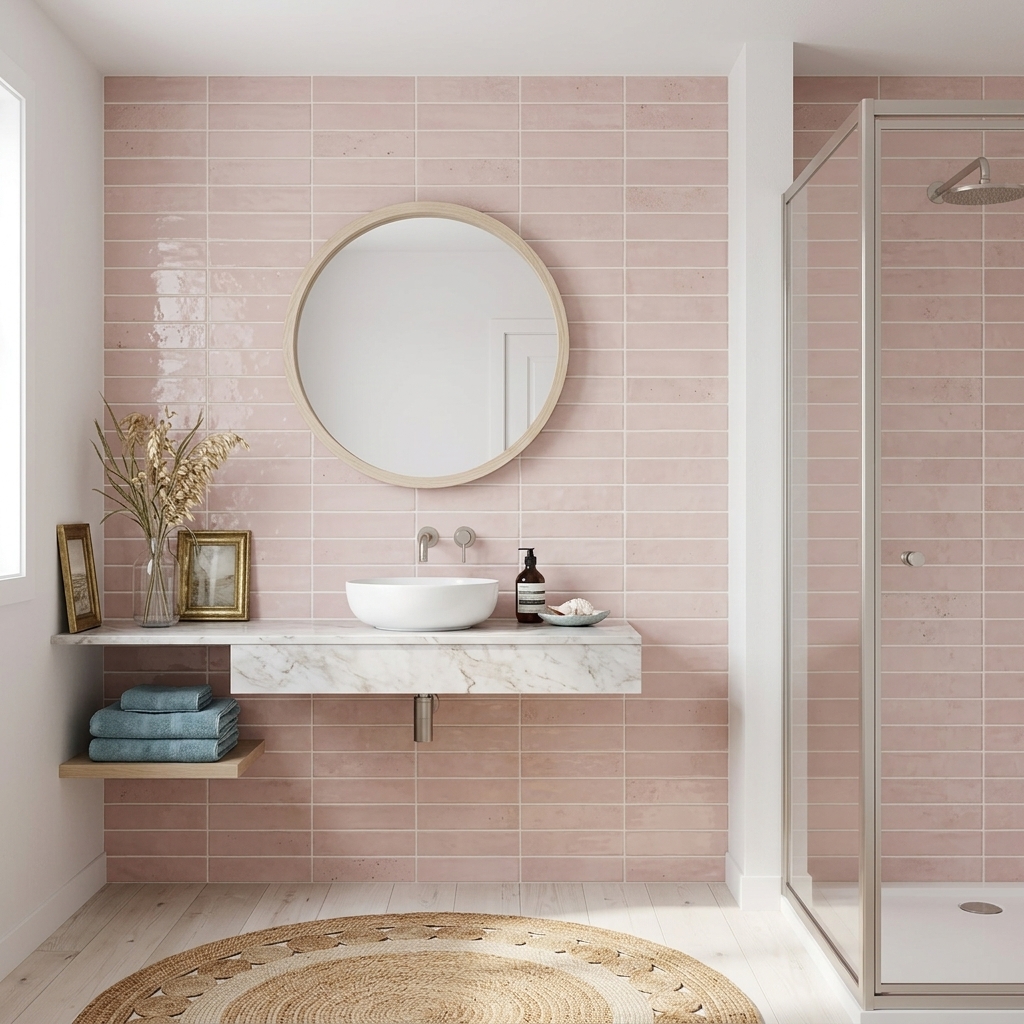
Every few years someone announces that subway tile is finished, and it never is, because it is genuinely neutral. It is not modern and not traditional. You cannot date a room from it. In a Federation cottage it reads as heritage; in a rendered box it reads as contemporary.
Which means that in a subway-tiled room, the decisions carrying the design are the ones nobody photographs: the grout colour, the subway tile layout, and the edge detail. The tile is the canvas, and it has been the canvas for 120 years. Whether it lands as a kitchen splashback tile or runs floor to ceiling in a bathroom, the metro tile keeps stepping aside and letting the rest of the room speak.

The bevel that never was
You will read that subway tile was bevelled to bounce light onto the platform. It is a tidy story, and it is not true. The originals were flat, and no reliable source supports the claim. The bevel is a later revival flourish, added long after those first stations opened.
One shape, nine glazes
A hundred and twenty years on, the rectangle has not changed. Only the colour has. The proportions that solved a public health problem in 1904 are the same ones sitting behind a modern stovetop today, and the choice you are really making is not the shape but the glaze, the grout, and the way you set them out.
That is the appeal of the humble white rectangle. It asks very little of you and gives a great deal back, quietly, for decades.
This piece appears in Kiln, our magazine. Flick through it here.
Ready to put one shape to work in your own home? Browse our white wall tiles or book a showroom visit to see the glazes in person.
Written by OnWood Tiles, 16 August 2026