Where the floor stops: four junctions that decide how a floor reads
Four small junctions decide whether a floor looks designed or merely finished. None cost much, and all get settled in a hurry on site.
By OnWood Tiles
A floor is mostly field. What decides whether it looks designed or merely finished is the handful of places where it stops or changes. There are four of them, and none cost much. The catch is that all four get settled in a hurry on site, often by whoever is holding the trowel that morning, so it pays to have made up your mind long before then.
Get these right and the floor reads as one considered surface. Get them wrong and you spend the next thirty years looking at the mistake.
The front door threshold
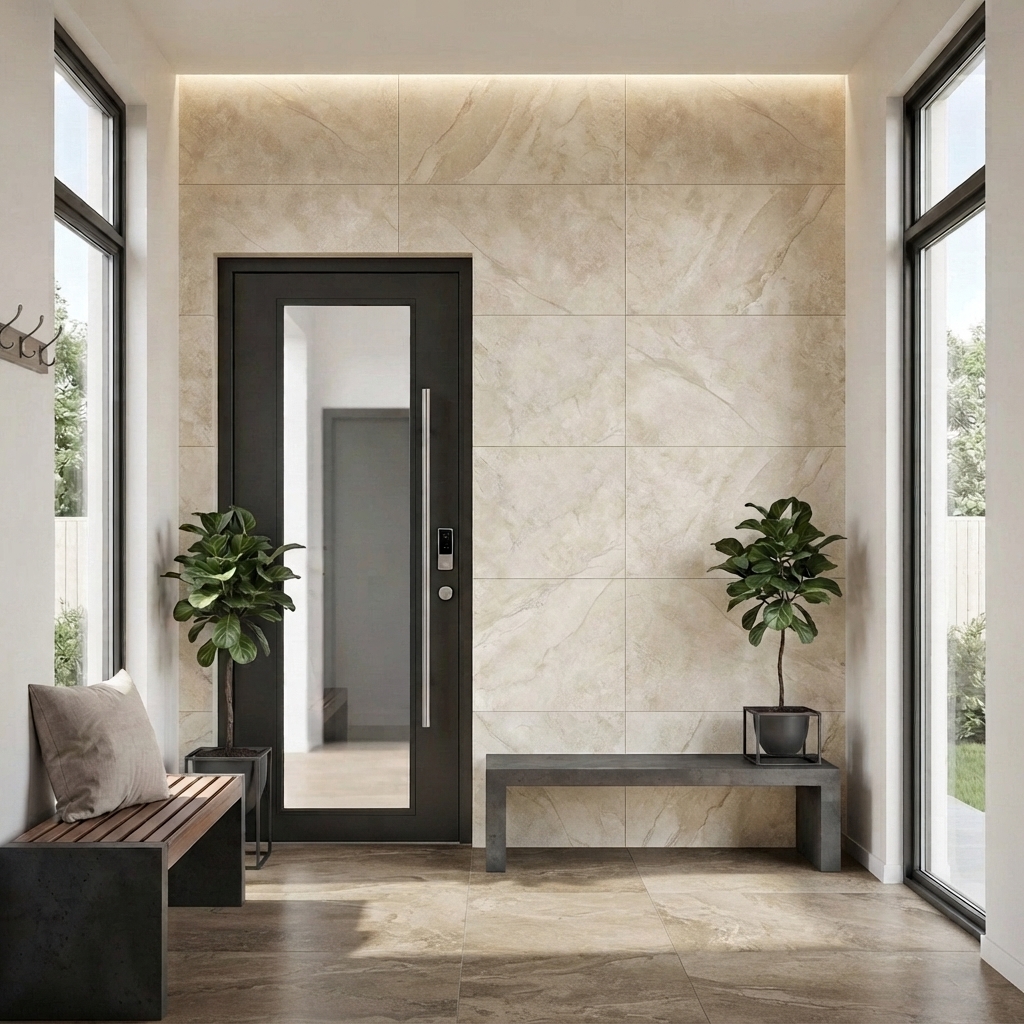
Set the grid out from here, not from the longest wall. It is tempting to work off the biggest run in the room because the maths feels tidier, but nobody stands at the far wall and studies the tile joints. They walk through the front door.
A sliver of cut tile at the entry is the first thing every visitor sees, and it is the first thing they will keep seeing for the next thirty years. A full tile landing cleanly at the threshold, by contrast, reads as intentional from the very first step. Start the set out at the door and let any awkward cuts fall away at the edges of the room where nobody is looking.
Most bad transitions are a bright strip in the wrong place.
Inside to outside
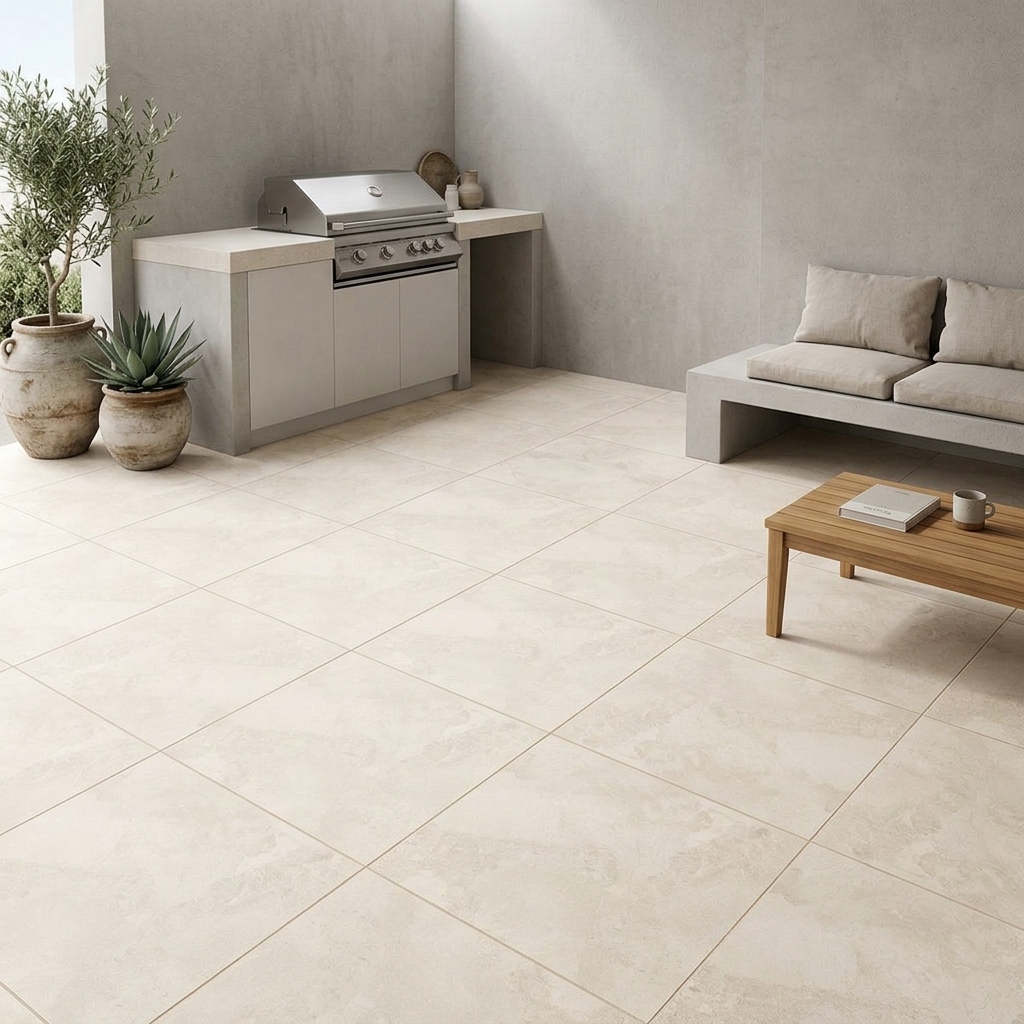
Where the floor meets the sliding door, run the same tile straight through in its grip finish, with the joints aligned across the track. When the pattern continues without a break and the lines carry across the threshold, the eye reads the patio as part of the room. The space grows by the full width of that outdoor area.
This is the junction most likely to be missed, because it needs deciding early. The grip finish for the outside area and the smoother version inside are often the same tile in two textures, so the sizes and joint lines have to be planned together from the start. Continue the surface, keep the joints running true across the track, and a modest room borrows the size of the courtyard beyond it.
Skirting, or no skirting
Where the floor meets the wall you have three honest options, and each asks something different.
Painted timber skirting sitting over the tile is the forgiving answer. It hides a slightly uneven cut at the base of the wall, it is quick, and it is easy to repaint down the track. A shadow line reveal, where the wall stops just short of the floor and leaves a clean recessed gap, is sharper and more contemporary, but it asks a lot of the plasterer to hold that line dead straight the whole way round. Skirting cut from the tile itself, with a strip of the floor turned up the wall, suits wet areas where you want a hard, washable base rather than painted timber.
None is wrong. Choose for the room: forgiving and warm, sharp and exacting, or hard and practical.
Meeting the carpet
Where hard floor meets carpet, land the change under the closed bedroom door, never in the opening. Stand in the hallway with the door shut and you should see tile all the way to the frame, with no strip of trim breaking the line. Open the door and the carpet begins, tucked out of sight beneath it.
When the join sits in the opening instead, it becomes a bright bar across the doorway that draws the eye every single time. Pick a trim that matches the tile rather than the carpet, so that on the hard side the change disappears into the floor. That is the whole trick: most bad transitions are simply a bright strip landed in the wrong place, and this one is the easiest of the four to get right once you know where to hide it.
This piece appears in Kiln, our magazine. Flick through it here.
When you are ready to plan yours, browse our tiles or book a showroom visit.
Written by OnWood Tiles, 16 August 2026