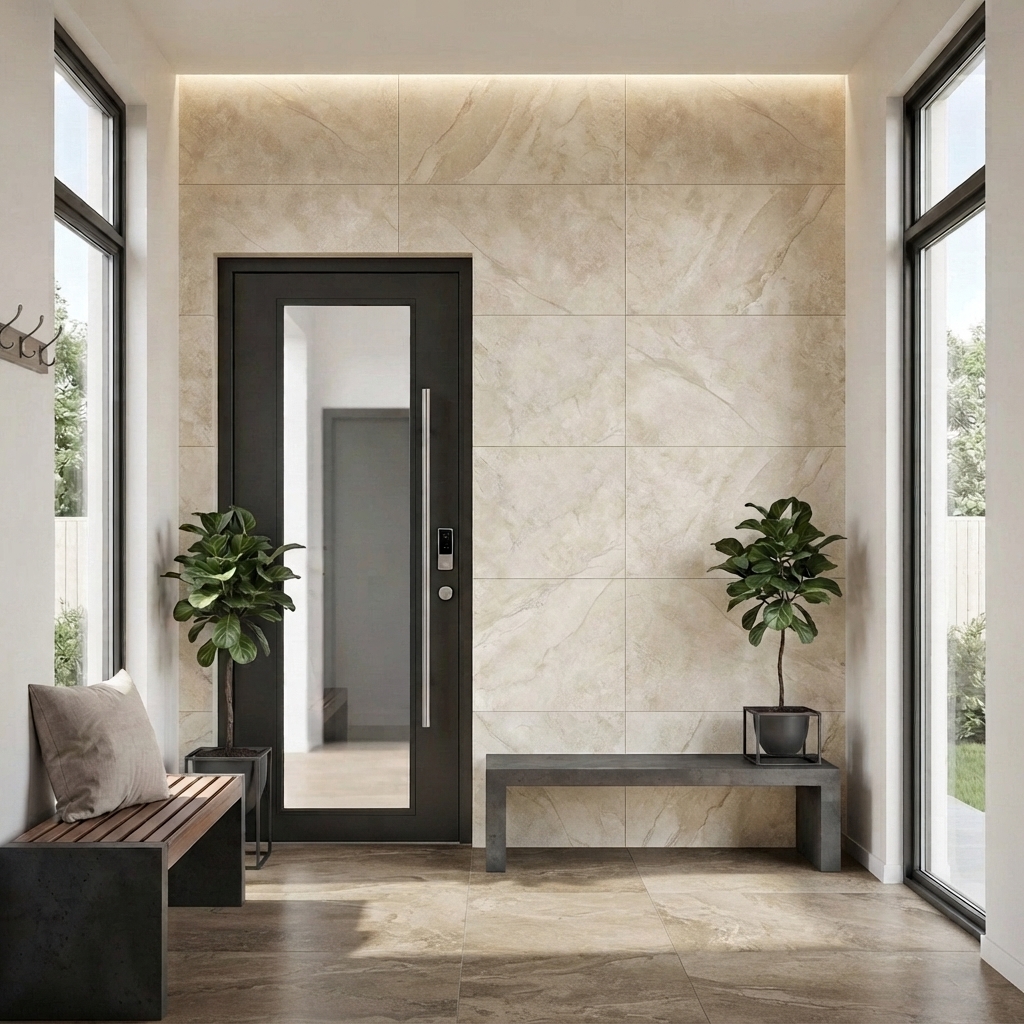
The coolest thing in the house: the best tiles to keep a home cool
Tile has kept homes cool for thousands of years. Here is the honest thermodynamics of why, and where it works on the Sunshine Coast.
By OnWood Tiles
Tile floors have been standard in hot climates for thousands of years. That is not tradition, it is thermodynamics. Step barefoot onto tile in February and it feels cold. It is not cold at all. It simply pulls heat away from your foot faster than a rug can. Your body reads that fast loss as a chill, but the floor is doing what a good hot-climate floor should.
Cold to the touch is not the same as cold
The sensation of a cool floor is really about how fast heat moves. A rug traps a pocket of still air against your foot and warms up, so it feels cosy. Tile does the opposite. It conducts heat readily, so it keeps pulling warmth from your foot rather than holding it. That is why tile reads as refreshing underfoot in summer while feeling harsh in a cold snap. Nothing about the tile changed, only the direction the heat is travelling.
The slab underneath is a thermal battery
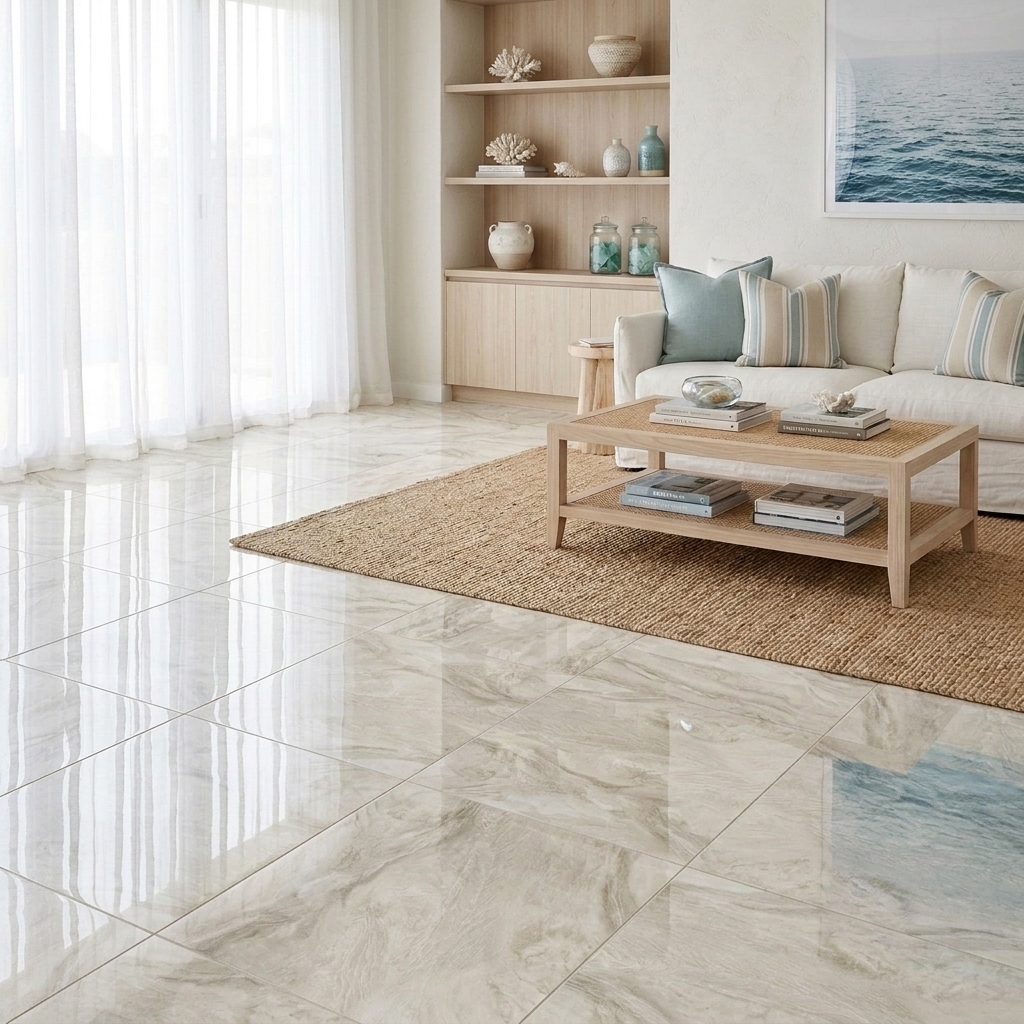
The real work happens below the tile. A concrete slab under tile behaves like a thermal battery. When the air is hotter than the slab, the slab soaks up that heat rather than letting the room warm quickly. The result is that the room's peak temperature flattens and lags by hours. Instead of the house heating in lockstep with the afternoon, the worst of the heat is absorbed and delayed, arriving softened and later in the day.
That lag is the whole appeal of thermal mass. It does not create coolness out of nothing. It moves the timing of the heat and blunts the spike, which is often exactly what you want in a hot climate.
The honest caveat: mass has to discharge
Here is the part that gets skipped. Mass only pays off if it can discharge overnight. The slab soaks up heat all day, and that heat has to go somewhere before the next morning, or the battery starts each day already full.
On the Sunshine Coast in February the overnight low is twenty-two degrees. The swing between day and night is narrow. A slab that cannot shed its stored heat becomes a liability rather than an asset, holding warmth into the evening instead of releasing it. Mass works here only when it is shaded through the day and night air can move across it to carry the stored heat away.
Good if it is shaded and can breathe at night. A liability if it cannot.
So the design questions matter as much as the material. Keep direct sun off the slab, and give the space cross ventilation so cooler night air can flow over the floor. Get those two things right and the thermal battery works for you. Get them wrong and the same slab will quietly radiate heat back at you all evening.
Pale, matt and light-toned reflects the heat
Colour and finish do real work too. Pale, matt, light-toned tiles help by reflecting radiant heat rather than storing it. A light surface bounces more of the sun's energy away before it ever becomes stored heat, so the floor starts cooler and stays cooler. A dark, glossy floor in a sunlit room does the opposite, drinking in radiant heat you then have to shed overnight. For a warm, bright room, lean towards soft, pale tones that keep the surface temperature down and suit the airy, open feel of a coastal home.
Putting it together
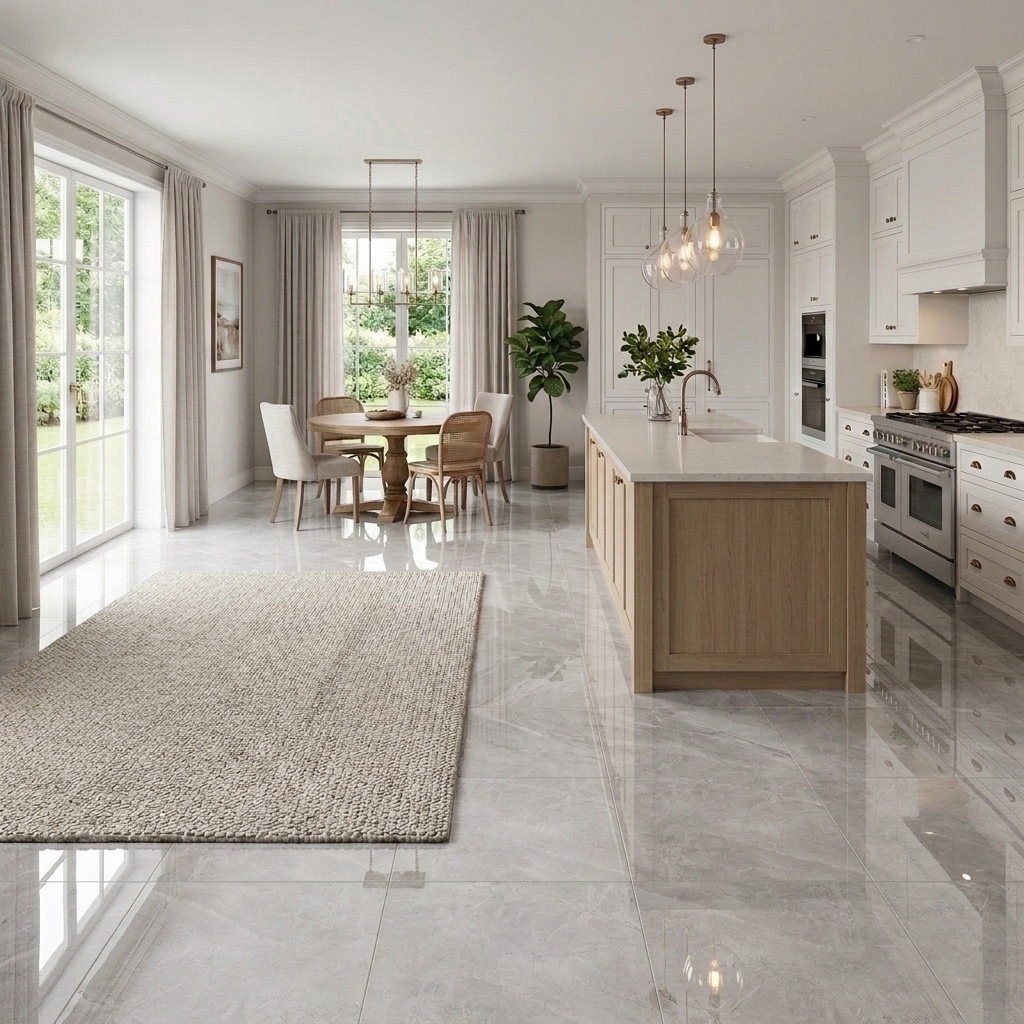
Tile keeps a home cool for solid physical reasons. It draws heat off your skin quickly, the slab beneath it flattens and delays the day's peak, and a pale, matt surface reflects radiant heat instead of hoarding it. The catch is that thermal mass is only an advantage when the floor is shaded and can breathe at night. On a coast where the overnight low sits at twenty-two degrees, that condition is the difference between a floor that feels like relief and one that feels like a radiator.
This piece appears in Kiln, our magazine. Flick through it here.
Ready to choose a cooler floor? Browse our tiles or book a showroom visit.
Written by OnWood Tiles, 16 August 2026